
Why So Many ACL Tears Happen on Day One of Camp
Most ACL tears happen with no one touching the athlete, and the first days back after a break are the riskiest. Why, and what actually lowers the risk.
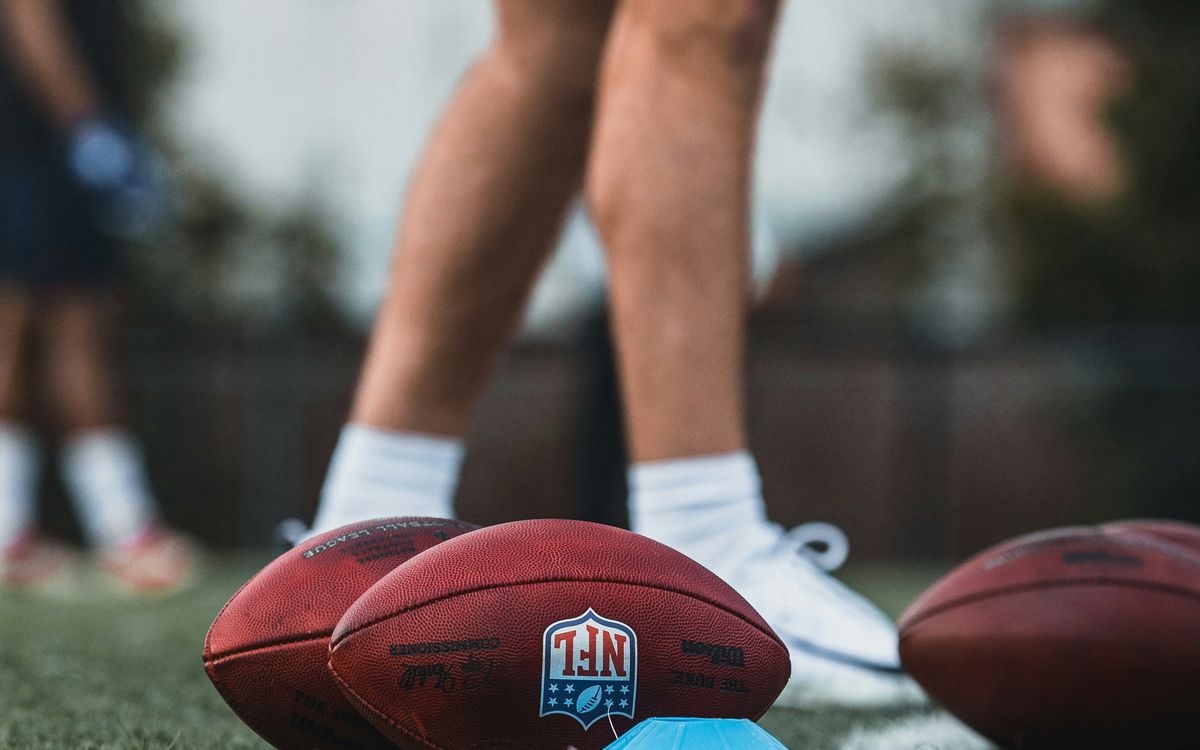
A young pass rusher jogs onto the field for the very first practice of training camp. No pads, no live contact, nobody within five yards of him. He plants to change direction, his knee buckles, and he goes down. Minutes later the medical staff already suspects what an MRI will confirm: a torn ACL, and a season over before it started.
That scenario played out again this summer when a promising NFL edge rusher tore his ACL on day one of camp, and it is the same story I hear in clinic every August from weekend athletes and high schoolers alike.
What surprises most people is that the vast majority of these injuries happen with no one touching the athlete at all. Understanding why the first days back are so dangerous, and what actually lowers the risk, is one of the most useful conversations I have with active patients.
Most ACL tears are non-contact
When people picture an ACL tear they imagine a brutal collision. In reality, roughly 70% of ACL injuries are non-contact. They happen during the ordinary movements of sport: decelerating hard, landing from a jump, or cutting to change direction. The knee caves inward, the shin rotates, and the ligament fails in a fraction of a second.
The athlete who got hurt without being touched didn't do anything wrong in that moment; the loading pattern his knee saw was simply more than the ligament could absorb.1
This matters because a non-contact injury is, at least in part, a preventable one. You cannot legislate away a defender falling onto someone's leg, but you can train the movement patterns that protect the knee during a cut or a landing.
Why the first days back are the riskiest
There is a well-documented spike in ACL tears in the preseason and in the first weeks after any long break. The reason is straightforward: detraining. After an offseason, a summer off, or a long layoff, muscles that stabilize the knee are weaker and slower to fire, and the finely tuned coordination that controls a hard cut has faded. Then, on day one, the athlete is asked to move at full speed on fresh legs that aren't ready for it.
Fatigue compounds the problem. As a practice wears on, landing mechanics deteriorate and the knee drifts into riskier positions. Add an unfamiliar surface, new cleats, or the adrenaline of competing for a roster spot, and you have the exact conditions that cluster ACL tears into those first sessions. This is not bad luck. It is a mismatch between how ready the knee is and how much is being asked of it.
| Higher-risk moment | What's happening at the knee |
|---|---|
| First practice after a long layoff | Stabilizing muscles are deconditioned and slow to react |
| Late in a fatiguing session | Landing and cutting mechanics break down |
| Planting to change direction | Knee collapses inward under rotational load |
| Landing from a jump off-balance | Force lands on a stiff, poorly aligned leg |
The good news: a lot of this is preventable
This is the part I want every athlete and parent to hear. Structured neuromuscular training programs — the kind that combine plyometrics, strengthening, balance work, and coaching on how to land and cut — have been shown to reduce non-contact ACL injuries by somewhere between 50% and 70%. That is an enormous effect for something that costs nothing but time and consistency.
Programs like the FIFA 11+ take about 15 to 20 minutes as part of a warm-up, and they work best when done regularly, well before the season starts rather than after an injury.2,3
The other half of prevention is simply respecting the ramp-up. Easing into full-speed cutting and jumping over days, not minutes, gives the neuromuscular system time to catch up. When I counsel patients returning from any layoff, I tell them the goal is to make the first week boring on purpose.
Who I talk to about this
I bring up prevention with anyone who cuts, pivots, and jumps for their sport: soccer, basketball, football, and volleyball athletes especially, and female athletes in those sports carry a higher baseline risk that makes the training even more worthwhile. I also raise it with adult recreational athletes coming off a winter of inactivity, and with any patient I've already reconstructed, because protecting the other knee matters just as much as the one I repaired.
Training at the Hospital for Special Surgery and later working the sideline as an assistant team physician for the New York Giants taught me that the best ACL surgery is the one you never have to do.
Frequently asked questions
If nobody hit him, why did the ACL tear?
Because most ACL tears are non-contact. The ligament fails from the forces of a hard plant, cut, or awkward landing when the muscles around the knee can't control the motion fast enough. It looks like a freak accident, but the mechanism is well understood.
Can prevention training really make that big a difference?
Yes. Well-run neuromuscular programs reduce non-contact ACL injuries by roughly 50 to 70%. They aren't a guarantee, but few interventions in sports medicine have that kind of evidence behind them.2
My child only plays part of the year. Is that riskier?
The gap itself is the risk. Coming back after months off, the knee is deconditioned, so easing back in and doing a warm-up prevention routine matters most for seasonal athletes.
How long is recovery if the ACL does tear?
For an isolated ACL reconstruction, I generally counsel athletes on a 9 to 12 month timeline for return to sport. If the meniscus is also repaired, that stretches to roughly 9 to 14 months. Rushing it is one of the biggest risk factors for re-tearing.
Do I need surgery for every ACL tear?
Not always, but for active people who want to return to cutting and pivoting sports, reconstruction is usually the durable answer. We decide together based on your goals, your activity level, and what else is going on in the knee.
If you or your athlete is heading into a new season, or coming back from a layoff, I'm always happy to walk through a simple prevention plan in clinic. A little preparation now beats a year of rehab later, and I'd much rather help you avoid the operating room than see you in it.
References
- Boden BP, Dean GS, Feagin JA, Garrett WE. Mechanisms of anterior cruciate ligament injury. Orthopedics. 2000;23(6):573-578. doi:10.3928/0147-7447-20000601-15
- Webster KE, Hewett TE. Meta-analysis of meta-analyses of anterior cruciate ligament injury reduction training programs. J Orthop Res. 2018;36(10):2696-2708. doi:10.1002/jor.24043
- Silvers-Granelli H, Mandelbaum B, Adeniji O, et al. Efficacy of the FIFA 11+ injury prevention program in the collegiate male soccer player. Am J Sports Med. 2015;43(11):2628-2637. doi:10.1177/0363546515602009
This article is general education, not medical advice for your situation. Every knee and hip is different — talk with your own doctor about your care.