
ACL Repair or Reconstruction? Two MRIs Show Why It Comes Down to the Tissue
Two ACL tears, two different surgeries. These MRIs show why ACL repair needs healthy tissue still attached to the tibia, and when reconstruction is the answer.
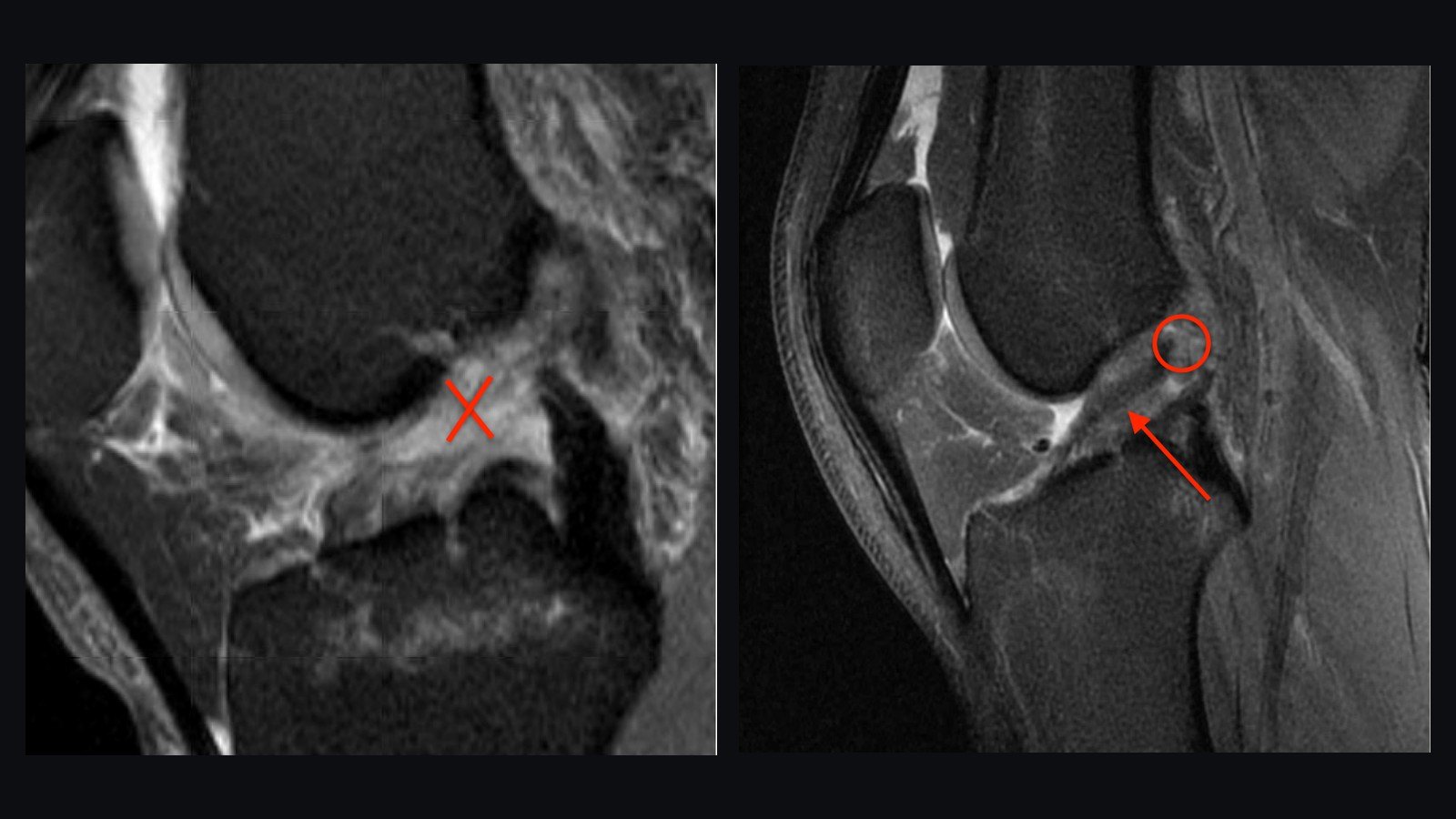
Two patients came to see me with the same diagnosis, a torn ACL, and both asked the question I am hearing more and more often in clinic: can you repair it instead of replacing it? One of them was a good candidate for a repair and the other was not.
The ACL repair patient that has tissue amenable to repair is often older with a less energetic injury pattern. This can often be from skiing, pickleball, or slipping on the grass. Usually, when the ACL is completely torn and not repairable, it is a younger and higher-energy injury, like high school soccer or football, or a more traumatic fall. In general, those that are amenable to repair skew a bit older and have lower demand.
Two knees, two different answers
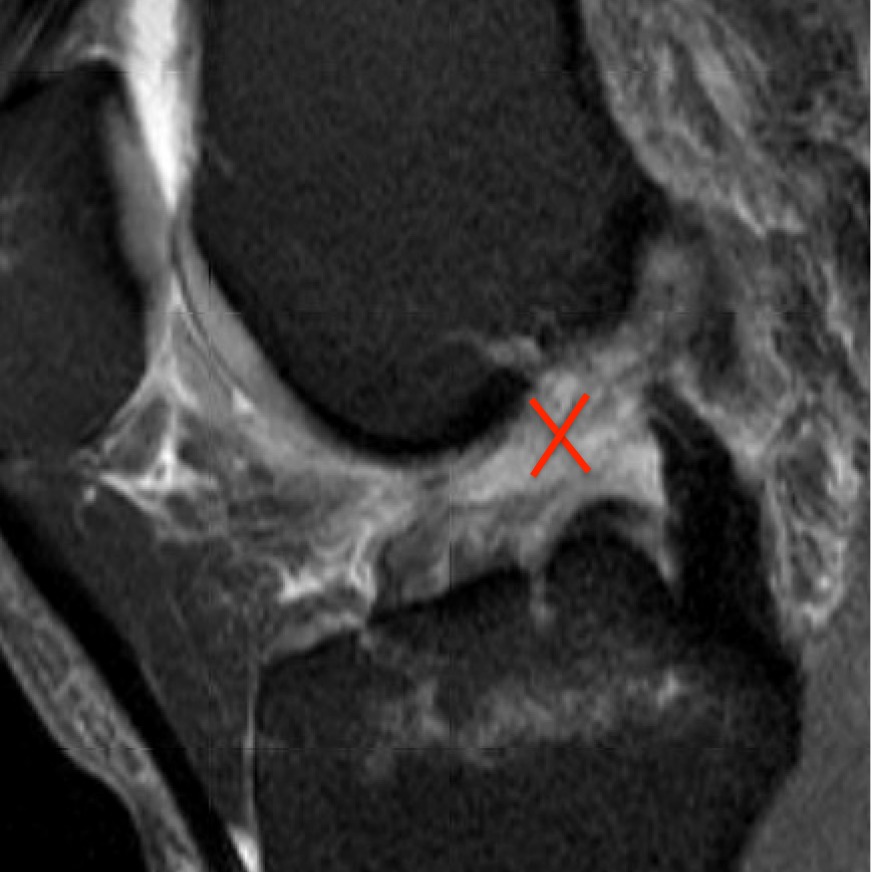
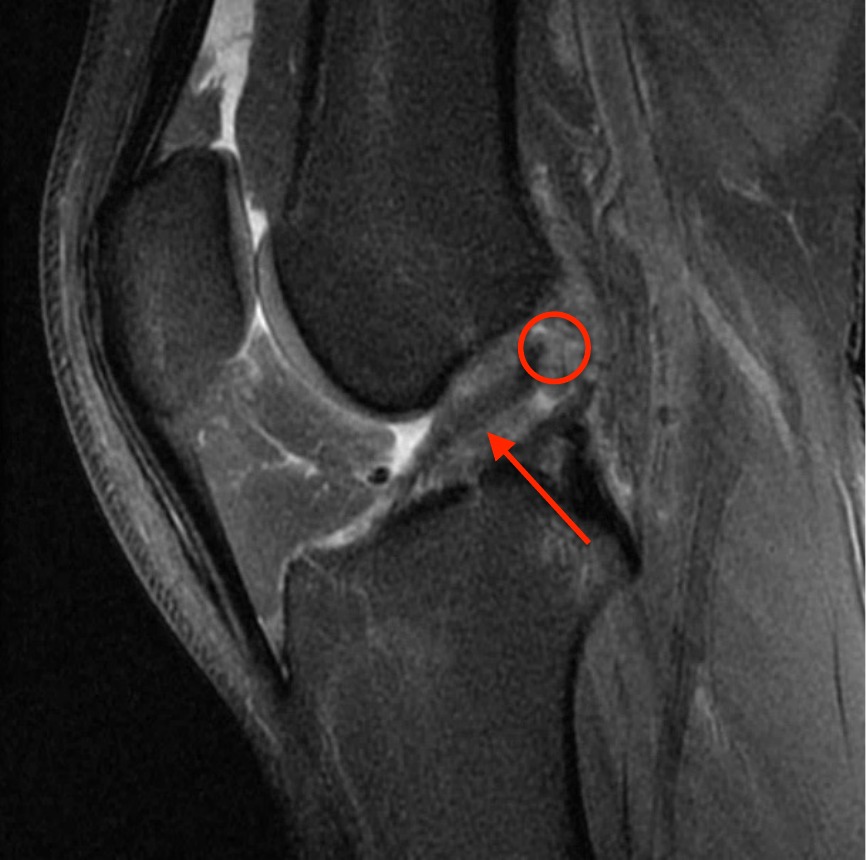
I always show the patient their MRI in clinic and print out a copy for them. From this, I also compare to an image of a normal ACL on an MRI. It quickly becomes evident if there is still tissue available or not, and a repair requires that that tissue be in place for a repair. I go over the MRI with each patient.
What a repair needs
For a repair, the torn ACL has to still be attached to the tibia, and we have to be early. Repair works best within the first several weeks after the injury, ideally within about 50 days, because after that the torn end shrinks and breaks down.
Indication for a possible ACL repair starts with the MRI looking like good tissue. When we're in surgery, we pass stitches through that tissue and make sure that it is still able to hold the sutures and is amenable to repair. There are times where we get into surgery planning a repair and, unfortunately, have to switch to a reconstruction if the tissue does not hold a good suture. We always aim to pick the best surgery with the information that we have, and sometimes in surgery the information changes.
When the tissue holds, I repair the ACL with the BEAR implant. The BEAR implant separates the healing ACL from the joint fluid. The joint fluid in a knee is actually counterproductive to healing. The way that I explain this is that joint fluid is there to lubricate the knee and actually prevent things from sticking together. Otherwise, our knee would stiffen every time we go to sleep. The oily joint fluid is not helpful for healing, and the BEAR implant separates the repairing ACL from the joint fluid. This allows the ACL to heal without the interruption of the joint fluid.
The plan and why
For younger and high-energy patients, they often tear the ACL in a more explosive fashion that does not leave us with fibers for repair. Furthermore, these patients are also high risk because they will be going back to high-level cutting and pivoting sports. The combination of these two things often leads towards a reconstruction, since this is a tried-and-true technique for getting people back to sports.
A repair has some real advantages when the tissue allows it. In the BEAR II randomized trial, hamstring strength two years after repair was about 98% of the other leg, compared with about 63% after a hamstring-graft reconstruction. The tradeoff is that the re-tear rate at two years was about 14% after repair and 6% after reconstruction, although that difference was not statistically significant1.
When a patient desires a repair, but the tissue quality is not there, I try to talk to them about their goals from this surgery. Generally, their goals are to get back to athletics and cutting and pivoting sports. The best way to achieve that goal is with a stable knee. Sometimes the best way to get a stable knee is with a reconstruction and not a repair, even though they desire a repair. I will always choose the surgery most appropriate for their condition, and not something just because it's newer or sounds better on paper.
Recovery is different too
After a repair, the brace is locked straight for the first 4 to 6 weeks so the ligament can heal. Running usually starts around 4 months and return to sport around 9 months, although the repair keeps maturing for up to two years. After a reconstruction the early bracing is shorter, and return to sport typically takes 9 to 12 months (9 to 14 months if we also repaired the meniscus). For either surgery, I clear patients based on strength and hop testing.
Where they are now
Both these patients have returned to their sports. The reconstruction patient returned to collegiate intramural soccer and remains active with a stable knee. The repair was an older patient who has since returned to skiing, and both are doing well.
Who this applies to
If someone calls fearing that they had an ACL injury, the most important thing is to quickly get evaluated and get an MRI. If we are attempting a repair, we do like to do this as soon as possible. Furthermore, we recommend getting into pre-surgical physical therapy to work on range of motion and get the quads firing.
References
- Murray MM, Fleming BC, Badger GJ, et al. Bridge-enhanced anterior cruciate ligament repair is not inferior to autograft anterior cruciate ligament reconstruction at 2 years: results of a prospective randomized clinical trial. American Journal of Sports Medicine. 48(6):1305–1315. doi:10.1177/0363546520913532
This article is general education, not medical advice for your situation. Every knee and hip is different — talk with your own doctor about your care.