
If You Have a Daughter in Athletics, Stop and Read This Now
Girls tear their ACL three to six times more often than boys, and prevention programs like FIFA 11+ cut that risk by 50–80%. What parents can do right now.
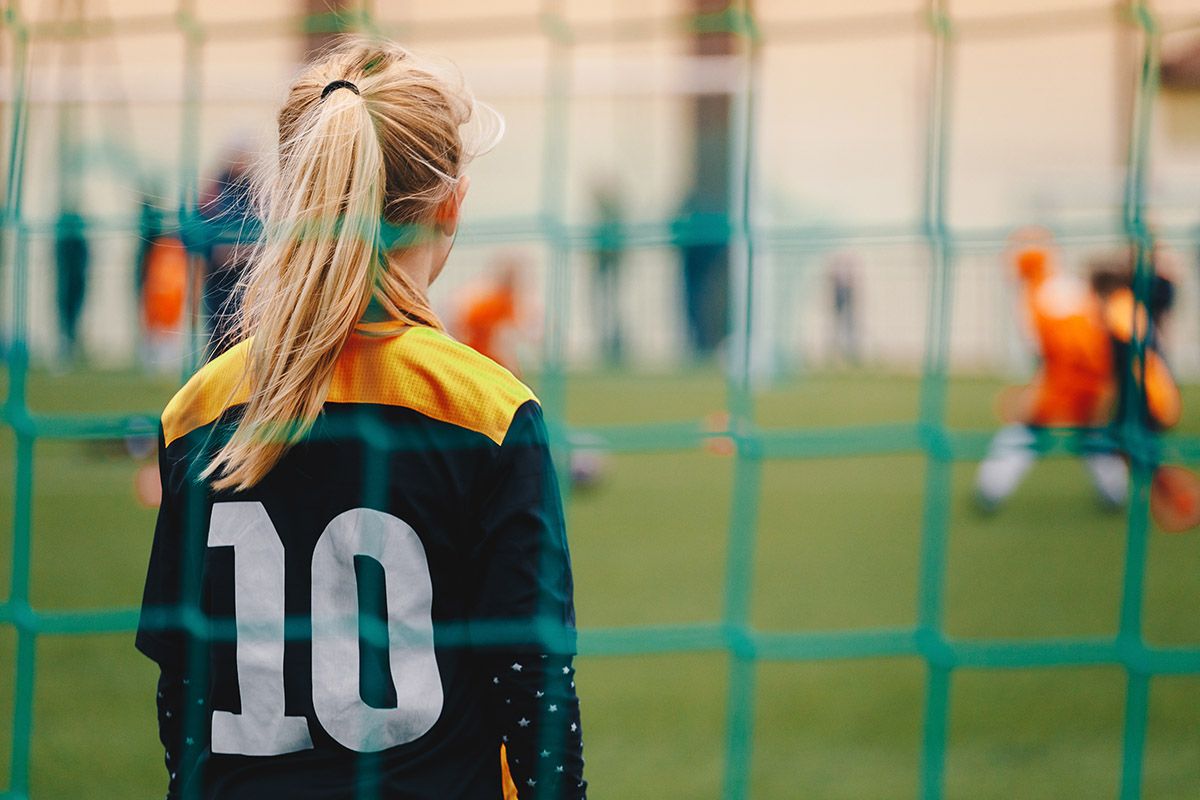
The New York Times Magazine just published one of the most important articles I've read about youth sports injuries. If you are the parent of a young female athlete, I am asking you directly: please read it.1
The article follows a Seattle-area father whose daughter and 19 of her current and former teammates tore their ACLs. Not over a decade. Over a few years of youth soccer. His daughter tore hers twice. Her friend tore hers twice. Three girls on a single high school team went down in one season. This is not an exaggeration or a scare piece — this is the reality I see in my clinic every week.
I see this every week
I perform approximately 85 ACL reconstructions per year. A disproportionate number are teenage girls who play soccer, basketball, or volleyball. The story is almost always the same: a non-contact plant-and-cut, a pop, immediate swelling, season over. Nine to twelve months of rehab ahead. And in many cases, nobody on that athlete's team had ever heard of an ACL prevention warm-up.
The article quotes an expert saying that the biggest barrier to FIFA 11+ — the most studied and validated prevention program in sports medicine — is simply that most coaches and parents don't know it exists. That matches exactly what I hear from families. They come into my office devastated by their daughter's injury, and when I explain that a 20-minute warm-up could have cut the risk by 50–80%2, the response is almost always the same: nobody told us.
Why girls are at higher risk
The article does an excellent job explaining the multiple factors at play. Anatomically, women tend to have wider hips relative to their femur length, which creates a greater inward angle at the knee. The notch in the femur where the ACL lives is narrower in women. Hormonal fluctuations during the menstrual cycle can increase ligament laxity.
And critically, female athletes are more likely to be quadriceps-dominant — relying on the front of the thigh rather than the hamstrings and glutes to control the knee during landing and cutting. The quadriceps pull the shinbone forward; the hamstrings pull it back. When that ratio is off, the ACL absorbs the difference.
But the article also makes the point I emphasize with every family: the modifiable risk factors are where the opportunity is. We can't change anatomy. We can change how athletes move. We can strengthen hips. We can teach proper landing mechanics. We can build hamstring strength. And the research shows that when we do these things consistently, ACL injuries drop dramatically.
What prevention actually looks like
The core of ACL prevention is neuromuscular training — teaching the body's nervous system to automatically protect the knee during the millisecond decisions of sport. This is not strength training alone, though strength matters. It's a combination of hip and core strengthening, eccentric hamstring work, plyometric landing drills, balance training, and sport-specific agility — all focused on eliminating the "knock-kneed" collapse (dynamic knee valgus) that is the mechanism for most non-contact ACL tears.
The FIFA 11+ program is the gold standard. It's a 20-minute warm-up that replaces your team's existing warm-up — it's not additional training time. It requires no equipment. It has been validated in randomized controlled trials involving tens of thousands of athletes across multiple countries, with ACL injury reductions of 50–80%.3
I have a full ACL prevention page on my website with detailed protocols, including a comprehensive 30-minute program for serious athletes and a 10-minute no-equipment routine for weekend warriors.
What parents can do right now
Start the conversation with your child's coach. Ask if the team does any ACL prevention warm-up. If the answer is no, share the NYT article and the FIFA 11+ program. If the coach is skeptical, the science is overwhelming — this is one of the most validated interventions in sports medicine. If they won't implement it as a team, your athlete can do it on their own before practices and games.
Start early. Ideally by age 10–12. The neuromuscular patterns we're training are best learned during developmental windows. Children who learn proper landing and cutting mechanics early develop those as their default movement patterns.
Consistency is everything. The research is clear: teams that do the program faithfully see dramatic reductions in injury. Teams that do it sporadically see minimal benefit. It takes 6–8 weeks of consistent training before the protective neuromuscular adaptations become ingrained. After that, the patterns are automatic — present even when the athlete is fatigued and fully focused on the game.
Don't specialize too early. Year-round single-sport specialization before age 14 is associated with higher ACL injury rates.4 Multi-sport participation builds a broader neuromuscular base and healthier knees. The data is not on the side of early specialization.
References
- Why are so many teen girls still tearing their A.C.L.s? The New York Times Magazine. February 26, 2026. https://www.nytimes.com/2026/02/26/magazine/acl-tear-women-girl-sports.html
- Webster KE, Hewett TE. Meta-analysis of meta-analyses of anterior cruciate ligament injury reduction training programs. J Orthop Res. 2018;36(10):2696-2708. doi:10.1002/jor.24043
- Silvers-Granelli HJ, Bizzini M, Arundale A, Mandelbaum BR, Snyder-Mackler L. Does the FIFA 11+ injury prevention program reduce the incidence of ACL injury in male soccer players? Clin Orthop Relat Res. 2017;475(10):2447-2455. doi:10.1007/s11999-017-5342-5
- Jayanthi NA, LaBella CR, Fischer D, Pasulka J, Dugas LR. Sports-specialized intensive training and the risk of injury in young athletes: a clinical case-control study. Am J Sports Med. 2015;43(4):794-801. doi:10.1177/0363546514567298
- Montalvo AM, Schneider DK, Webster KE, et al. Anterior cruciate ligament injury risk in sport: a systematic review and meta-analysis of injury incidence by sex and sport classification. J Athl Train. 2019;54(5):472-482. PMID 31009238
- National ACL Injury Coalition / Aspen Institute Project Play. Analysis: serious knee injury among teen athletes grows 26% (High School RIO data, 2007–2022). projectplay.org/news/2023/11/22/analysis-serious-knee-injury-among-teen-athletes-grows-26
This article is general education, not medical advice for your situation. Every knee and hip is different — talk with your own doctor about your care.