
Pain With Stairs, Squats, or Downhill Hiking? Meet the "Other" Partial Knee Replacement
Arthritis behind the kneecap has a telltale pattern. Who is a candidate for a patellofemoral (kneecap) replacement, what the surgery involves, and the honest tradeoffs.
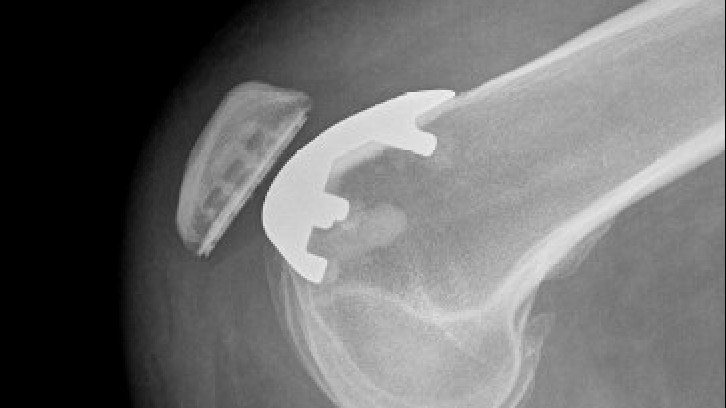
When most people hear "partial knee replacement," they picture the common one, which replaces the inside of the knee. There's another partial knee that far fewer people (and honestly, far fewer surgeons) talk about: the patellofemoral replacement, or kneecap replacement.
It's much less common. But for the right patient, it can be life-changing, and a lot of those patients don't know it exists.
Does this sound like your knee?
Arthritis behind the kneecap has a very specific pattern. Patients tell me about:
- Pain with squats, or getting up from a low chair or out of the car
- Pain on stairs, especially going down
- Pain hiking, especially downhill
- Crunching, grinding, or crepitus in the front of the knee
- An ache after sitting for a long time with the knee bent
And here's the clue: walking on flat ground is often surprisingly fine. That's because the kneecap joint takes its biggest loads when the knee is bent and working, like going downstairs or downhill.
One honest note on crepitus. Crunching in the front of the knee by itself is very common and usually harmless. It matters when it comes with pain, swelling, and the activity limits above.
Who gets kneecap arthritis?
It's more common than most people think. In one X-ray study, about 1 in 7 adults over 60 had arthritis confined to the kneecap joint1. The patients I see who do best with a kneecap replacement usually have a clear mechanical reason the joint wore out: a shallow groove the kneecap never tracked well in (trochlear dysplasia), a history of kneecap dislocations, or an old injury to the kneecap. In patients with dysplasia, the rest of the knee also tends to stay healthier after surgery2.
Most people should start with non-surgical treatment, and many do well with it. Hip and quad strengthening, activity changes, weight loss when it applies, and injections can all help. Surgery is for when those stop working and imaging shows the arthritis is limited to the kneecap joint.
What the surgery looks like
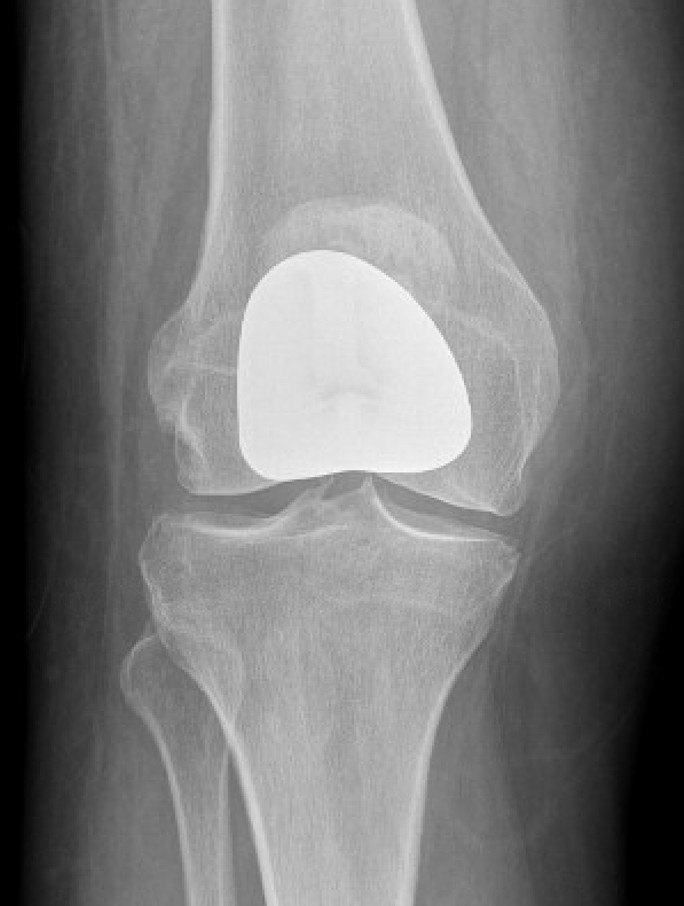
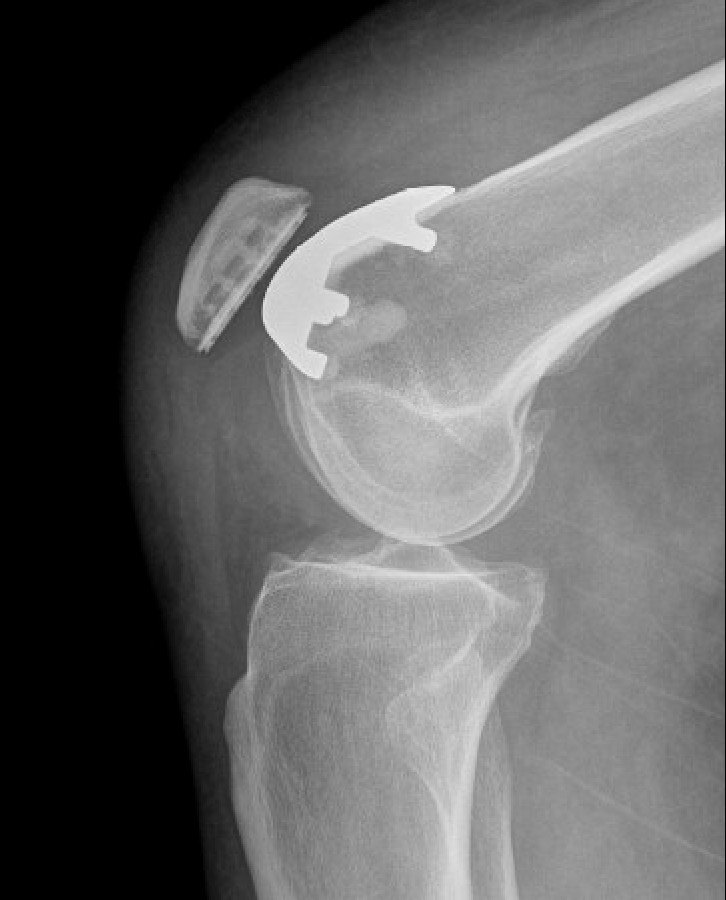
I resurface the back of the kneecap and replace the groove it slides in. That's it. The rest of your knee stays yours. Compared with a total knee replacement, that means less bone removed, all your ligaments kept, and a knee that tends to feel more natural.
It's about a 45-minute outpatient surgery, and most patients go home the same day. You walk on it the first day, and most people are back to hiking and pickleball around 3 months. I don't recommend running or jumping sports afterward.
The honest tradeoffs
This isn't the right surgery for everyone. If you have arthritis in other parts of the knee, inflammatory arthritis, or pain that isn't clearly coming from the kneecap, a total knee is usually the better operation, and I'll tell you that.
Modern implants do much better than the older designs that gave this surgery a mixed reputation. Still, a recent meta-analysis found about a 16% revision rate at 10 years3, which is higher than a total knee. The most common reason is arthritis developing elsewhere in the knee later. When that happens, it can be converted to a total knee, and that conversion generally goes well. Choosing a kneecap replacement first doesn't close any doors.
Is your kneecap the problem?
I do about 50 partial knee replacements a year, and I think about arthritis one compartment at a time. If stairs, squats, and downhill hikes have become the hard part of your day, come see me. We'll figure out exactly where your arthritis is and whether replacing just that part makes sense.
References
- Davies AP, Vince AS, Shepstone L, Donell ST, Glasgow MM. The radiologic prevalence of patellofemoral osteoarthritis. Clinical Orthopaedics and Related Research. 402:206–212. doi:10.1097/00003086-200209000-00020
- Dahm DL, Kalisvaart MM, Stuart MJ, et al. Patellofemoral arthroplasty: outcomes and factors associated with early progression of tibiofemoral arthritis. Knee Surgery, Sports Traumatology, Arthroscopy. 22:2554–2559. doi:10.1007/s00167-014-3202-3
- Clar C, Budin M, Rasic L, et al. Contemporary patellofemoral arthroplasty is associated with lower revision rates compared with the previous decade: a meta-analysis using revisions per 100 component-years. Knee Surgery, Sports Traumatology, Arthroscopy. doi:10.1002/ksa.70381. PMID 41806122
This article is general education, not medical advice for your situation. Every knee and hip is different — talk with your own doctor about your care.