
Could We Actually Cure Arthritis? Three New Approaches That Have Me Paying Attention
Three federally funded teams regrew cartilage — and in one case a whole knee — in animal studies, with human trials planned. Why this feels different, and the honest caveats.
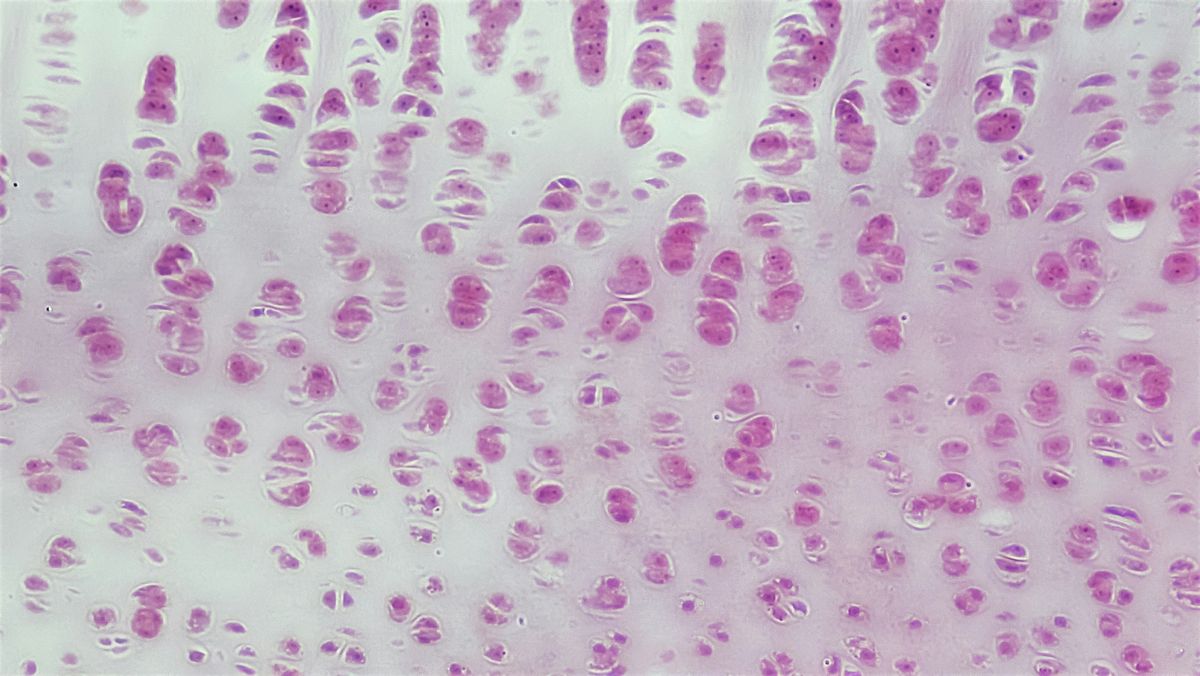
Every week in clinic, I sit across from patients with bone-on-bone knee arthritis and have some version of the same conversation: we can manage your pain, we can modify your activity, and when you're ready, we can replace the joint. What I can't do — yet — is regrow the cartilage you've lost. That's been the fundamental limitation of osteoarthritis treatment for my entire career.
That may be changing. ARPA-H, a federal research agency modeled after the defense program that helped develop the internet and GPS, just announced that three research teams have successfully regrown bone and cartilage — and in one case, an entire knee — in animal studies. Human trials are expected within 18 months.1
My former colleague Dr. Scott Rodeo, vice chair of orthopedic research at the Hospital for Special Surgery where I completed my fellowship, called it "hugely promising" and a potential "paradigm shift." I don't use language like that lightly, but I agree with him.
Three teams, three very different strategies
What makes this exciting is that these aren't three variations on the same idea. Each team tackled the problem from a completely different angle:
| Team | Approach | What they showed |
|---|---|---|
| Duke | Injections that stimulate existing cartilage cells to regrow and remodel thickened bone | Cartilage regrowth and bone remodeling in rats and mice |
| Colorado | A repurposed drug (single injection) that regenerates cartilage; plus an injectable protein for bone-on-bone cases | Full knee regeneration in rabbits within 2 months; cartilage regrowth in 3 months for advanced OA |
| Columbia | 3D-printed scaffold filled with bone and cartilage cells that grows into a functioning joint | Functional joint tested in cadavers with robotic gait simulation; scaffold dissolves over ~1 year |
Why this feels different
I've been in orthopedics long enough to have seen plenty of "breakthroughs" that didn't pan out. So why am I paying closer attention this time? A few reasons.
First, ARPA-H isn't a typical grant agency — these teams are contractually obligated to move from animal studies to human trials and, if successful, to commercialize the treatment. There's a built-in requirement that approved therapies cost no more than 25% of the current standard of care. That's a fundamentally different incentive structure than academic publishing.
Second, the Colorado team's results are striking: rabbits with the equivalent of an ACL-tear-induced arthritis saw full knee regeneration within two months of a single injection.1 As someone who performs approximately 85 ACL surgeries a year, I know firsthand that post-traumatic arthritis is one of the biggest long-term concerns my patients face. An injection that could reverse that process would change how I counsel every ACL patient.
The honest caveats
Animal studies are not human studies. Rabbits and rats heal differently than we do, and plenty of therapies that look incredible in animals fail in clinical trials. The Columbia team's scaffold approach still needs large-animal testing. And even if human trials begin on schedule, we're likely years away from anything available in a clinic like mine.
I don't want anyone reading this to cancel their knee replacement consultation — if you're in pain now, the solutions we have today are excellent and well-proven.
I'll be following these trials closely. If you're dealing with knee arthritis and wondering what your options are — today or down the road — I'm always happy to talk it through in clinic.
References
- ARPA-H. ARPA-H fast-tracks historic regenerative breakthroughs to transform osteoarthritis care [press release]. arpa-h.gov/news-and-events/arpa-h-fast-tracks-regenerative-breakthroughs-transform-osteoarthritis-care (NITRO program: arpa-h.gov/explore-funding/programs/nitro)
- Columbia Engineering. ARPA-H awards Columbia researchers nearly $39M to develop living knee replacement. engineering.columbia.edu/about/news/arpa-h-awards-columbia-researchers-nearly-39m-develop-living-knee-replacement
- Centers for Disease Control and Prevention. Osteoarthritis. cdc.gov/arthritis/osteoarthritis/index.html
This article is general education, not medical advice for your situation. Every knee and hip is different — talk with your own doctor about your care.