
Ozempic, Mounjaro, and Your Knees: What the New Research Actually Says
GLP-1 drugs were linked to far fewer knee replacements, may protect cartilage directly, and lower infection risk before surgery. What the research shows and how I use it.
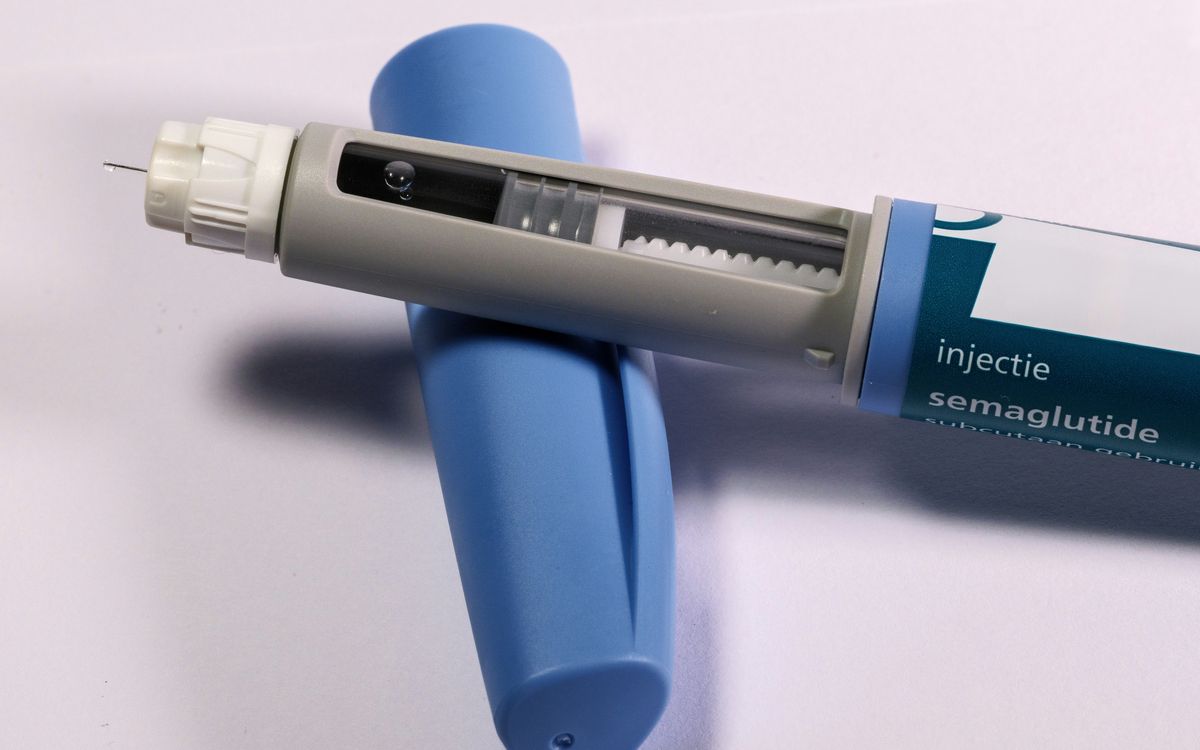
It happens in my clinic almost every day now. A patient with bone-on-bone arthritis sits down, we talk through the options, and then they ask the question: "I just started Ozempic. Does that change anything?"
A year or two ago I would have said it helps you lose weight, and less weight is good for an arthritic knee. That is still true. But a wave of new research suggests these drugs might be doing more for the joint than just lightening the load, and they are also changing how I plan knee replacements.
Here is where the evidence stands, and how I actually use it with patients.
Fewer knee replacements in people on GLP-1 drugs
The headline study came out of a large medical-records database of roughly 6.7 million adults with knee arthritis. Researchers compared people who took a GLP-1 drug (the class that includes semaglutide, sold as Ozempic and Wegovy, and tirzepatide, sold as Mounjaro and Zepbound) with matched patients who did not, and then tracked who ended up with a knee replacement over the next eight years.1
Everyone on these drugs had fewer knee replacements. The effect was largest with the newer agents and with longer use.
The authors estimate that this would translate to roughly 14,000 fewer knee replacements per year in the United States. As someone who performs a lot of knee replacements, I find that more interesting than threatening. Nobody wants surgery they can avoid.
Two honest caveats. This is observational data, not a randomized trial, so it shows association, not proof. And the database could not tell us how bad each person's arthritis was, how active they were, or whether they actually took the pills or injections they were prescribed. A knee that already has no cartilage left is not going to be rescued by a weekly injection.1
It may not be just the weight loss
The part that surprised me came from a laboratory study published in Cell Metabolism. In animal models of knee arthritis, semaglutide slowed cartilage breakdown, reduced bone-spur formation, calmed inflammation in the joint lining, and lowered pain sensitivity, and it did so independently of weight loss. These drugs appear to have anti-inflammatory effects directly inside the joint.2
That is a big deal, because right now we have no medication that changes the course of osteoarthritis. Everything we offer, from anti-inflammatories to injections, treats symptoms. If a drug that many patients are already taking for other reasons also protects cartilage, that would be the first true disease-modifying option in my career. But animal data is animal data. The human trials that would prove this are only beginning.
What it means if you do need a knee replacement
Obesity raises the risk of infection, wound problems, and implant failure after joint replacement. For years the options for a heavier patient were to lose weight on their own, have bariatric surgery first, or accept the higher risk. A large matched study now compares those paths directly in patients with a body mass index over 35.3
| Risk at 5 years after knee replacement | Bariatric surgery before TKA | GLP-1 drug before TKA (comparison group) |
|---|---|---|
| Deep joint infection | 1.7× higher | Baseline |
| Any revision surgery | 1.7× higher | Baseline |
| Implant loosening | 3.8× higher | Baseline |
| Fracture around the implant | 2.8× higher | Baseline |
Compared with heavy patients who had no weight-loss intervention at all, the GLP-1 group also did better: about one-third lower odds of deep infection and revision, and roughly 60% lower odds of implant loosening.3
My reading is that gradual medical weight loss, without the nutritional and bone-density side effects of bariatric surgery, gets patients into surgery in better shape. It also fits what I see: patients who arrive at surgery with better metabolic health tend to recover faster and have fewer wound issues.
One practical wrinkle: these drugs slow stomach emptying, which matters for anesthesia. Current guidance from the anesthesia societies is to hold weekly injections for about a week before surgery or, for some patients, to switch to a liquid diet the day before.4 I coordinate this with my anesthesia team on every case, so please tell us if you are on one of these medications, even if you started it recently.
Who I talk to about this
In my practice this conversation comes up in three groups:
- Patients with moderate arthritis who are not ready for surgery and who also have obesity or diabetes. For them, a GLP-1 drug prescribed by their primary care doctor is a reasonable part of joint preservation, alongside strengthening, activity modification, and injections when appropriate.
- Patients who need a knee replacement but whose weight puts them in a higher-risk category. Getting the BMI down before surgery, whether through medication or not, is one of the most powerful things they can do to lower their infection risk, and I would rather they do it with a GLP-1 drug than rush into bariatric surgery for the sake of the knee.
- Patients who are already on one of these drugs and are scheduling surgery, so we can plan the peri-operative hold correctly.
I am not a prescriber of these medications, and they have real side effects, including nausea, muscle loss if protein intake and strength training are neglected, and cost. Muscle loss in particular matters to me because quad strength is what drives recovery after knee surgery. If you are on one of these drugs, lift weights and eat protein. My nutrition page covers keeping muscle mass on GLP-1 medications and around surgery.
Frequently asked questions
Will Ozempic fix my arthritis?
No. It will not regrow cartilage, and a knee that is already bone-on-bone will still need a replacement eventually. What the research suggests is that it may slow progression and reduce pain in earlier arthritis, and that it lowers surgical risk for patients who do need a replacement.
Should I lose weight before my knee replacement?
If your BMI is over 45, yes, and I will often ask you to get it under that threshold before surgery because infection risk climbs steeply above it. Between 35 and 45, it is a conversation about your overall health. Below 35, weight is rarely the deciding factor.
Do I have to stop the medication before surgery?
Usually the weekly injection is held for about one week before surgery, and daily forms are held the day of surgery. My office will give you specific instructions, so do not stop on your own without checking.
Does this apply to hip replacement too?
The weight-loss and surgical-risk findings almost certainly do, since infection risk tracks with BMI in the hip as well. The cartilage-protection data has only been studied in the knee so far.
Can I get a prescription from you?
I leave prescribing to your primary care physician or an endocrinologist, since these drugs need monitoring that fits better in a primary-care setting. I am happy to send a note explaining why I think it would help your knee.
This is one of the more hopeful developments I have seen in arthritis care in a long time, and the research is moving fast. If you are on one of these medications or wondering whether it could help your knee, bring it up at your next visit. I would rather have the conversation than have you guess.
References
- Carter V, Desverreaux E, Amin I, Fogarty AE, Hussain N, D'Souza R, Karri J. Glucagon-like peptide 1 receptor agonist use and risk of arthroplasty for knee osteoarthritis: retrospective database analysis. Reg Anesth Pain Med. 2026. doi:10.1136/rapm-2026-107658
- Qin H, Yu J, Yu H, et al. Semaglutide ameliorates osteoarthritis progression through a weight loss-independent metabolic restoration mechanism. Cell Metab. 2026;38(3):582-597. PMID 41666927
- Bcharah G, Wininger AE, Elsabbagh Z, Braithwaite CL, Van Schuyver PR, et al. Preoperative weight loss intervention with GLP-1 receptor agonists is associated with lower complication rates following primary total knee arthroplasty than preoperative bariatric surgery. Arthroplasty Today. 2026;39:102033. doi:10.1016/j.artd.2026.102033
- Kindel TL, Wang AY, Wadhwa A, et al. Multisociety clinical practice guidance for the safe use of glucagon-like peptide-1 receptor agonists in the perioperative period. Clin Gastroenterol Hepatol. 2024. PMID 39480373
This article is general education, not medical advice for your situation. Every knee and hip is different — talk with your own doctor about your care.