
Two Torn Menisci, Two Very Different Timelines: Why a Repair Takes Longer Than a Trim
One pro was back in six weeks, the other is out six months. The trim-versus-repair decision that drives meniscus recovery, and why I repair whenever the tissue allows.
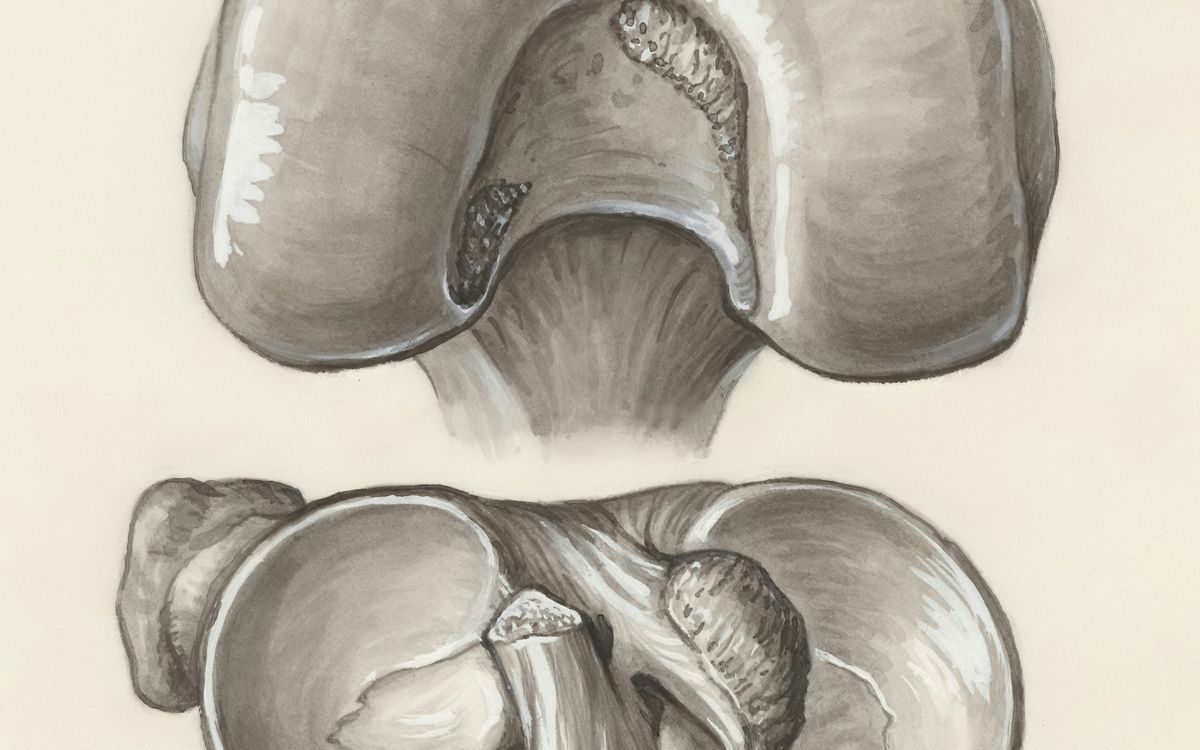
Two professional athletes tore a meniscus this summer. One, an All-Star catcher for the Athletics, had his meniscus trimmed and was back in rehab games within about six weeks. The other, a 21-year-old NBA guard for the Trail Blazers, had his meniscus repaired and won't be re-evaluated for six months. Same body part, same word in the headline, wildly different recoveries.
I get this question in clinic every week: "Why did my friend bounce back in a month and I'm looking at half a year?" The answer usually comes down to one decision made in the operating room: trim or repair.
Trim vs. repair: what actually happens
A partial meniscectomy (a "trim") removes the torn, flapping piece and smooths the edge. Nothing needs to heal, so you're walking out of the surgery center that day and back to sport in a few weeks.
A meniscus repair stitches the torn edges back together and asks your body to heal the tissue. That takes months of protected weight bearing and limited knee bending, because the sutures only hold things in place; biology does the rest.
So why would anyone choose the slower option?
Because the meniscus is your knee's shock absorber, and you don't get it back once it's gone. Every piece removed shifts more load onto the cartilage underneath.
In a systematic review comparing the two operations, repair had a much higher reoperation rate (about 21% vs. 4% long term), but the repaired knees had better function scores and less arthritis on X-ray years later.2 That is the honest tradeoff: a trim is faster and more predictable in the short run; a repair is a bigger investment with a better long-term payoff when it heals.
| Partial meniscectomy (trim) | Meniscus repair | |
|---|---|---|
| Best for | Degenerative or complex tears; tears in the inner "white zone" with poor blood supply | Fresh, vertical tears near the outer rim with good blood supply; younger and active patients |
| Weight bearing | Immediately | Often crutches for 4–6 weeks |
| Return to sport | Roughly 4–8 weeks | Roughly 4–6+ months |
| Main risk | Faster cartilage wear over years | Repair fails to heal (~1 in 5) and needs a second surgery |
| Long-term joint health | Worse | Better, if it heals |
Why the catcher got a trim and the guard got a repair
I wasn't in either operating room, but the pattern is familiar. Tear location and tear pattern usually decide this, not the surgeon's preference or the athlete's schedule.
The catcher's medial tear was reportedly planned as a repair and turned into a trim once the surgeon saw the tissue. That happens. I tell every patient going in for a meniscus surgery that the final call is made with the camera in the knee, and I need their permission to do whichever operation the tear deserves.
A lateral meniscus tear in a 21-year-old with decades of jumping ahead of him is exactly the case where I'll push hard to repair, even at the cost of a season.
Who I talk to about this
In my practice, I have this conversation most often with three groups:
- Young athletes with an acute twisting injury. These are the tears most likely to be repairable, and I repair them whenever the tissue allows.
- Patients having ACL reconstruction. A meniscus repair heals more reliably alongside the ACL, and I fix nearly every repairable tear I find.
- Adults over 40 with a degenerative tear. Here a repair usually won't heal, and a trim — or often no surgery at all — is the right answer.
Age matters less than tissue quality, but the two tend to travel together.
If you've been told you have a meniscus tear and you're trying to figure out which path makes sense for your knee and your goals, bring the MRI and let's talk through it in clinic.
References
- Bensa A, et al. Return to sport after meniscectomy, meniscal repair, and meniscal allograft transplantation for meniscal lesions in athletes: a systematic review and meta-analysis. Knee Surg Sports Traumatol Arthrosc. https://doi.org/10.1002/ksa.70404
- Paxton ES, Stock MV, Brophy RH. Meniscal repair versus partial meniscectomy: a systematic review comparing reoperation rates and clinical outcomes. Arthroscopy. 2011;27(9):1275-1288. https://doi.org/10.1016/j.arthro.2011.03.088
This article is general education, not medical advice for your situation. Every knee and hip is different — talk with your own doctor about your care.