
Anterior Hip Replacement: Why the Approach Your Surgeon Uses Matters
How the direct anterior approach spares muscle, why most patients skip hip precautions, the honest tradeoffs like thigh numbness, and what to ask your surgeon.
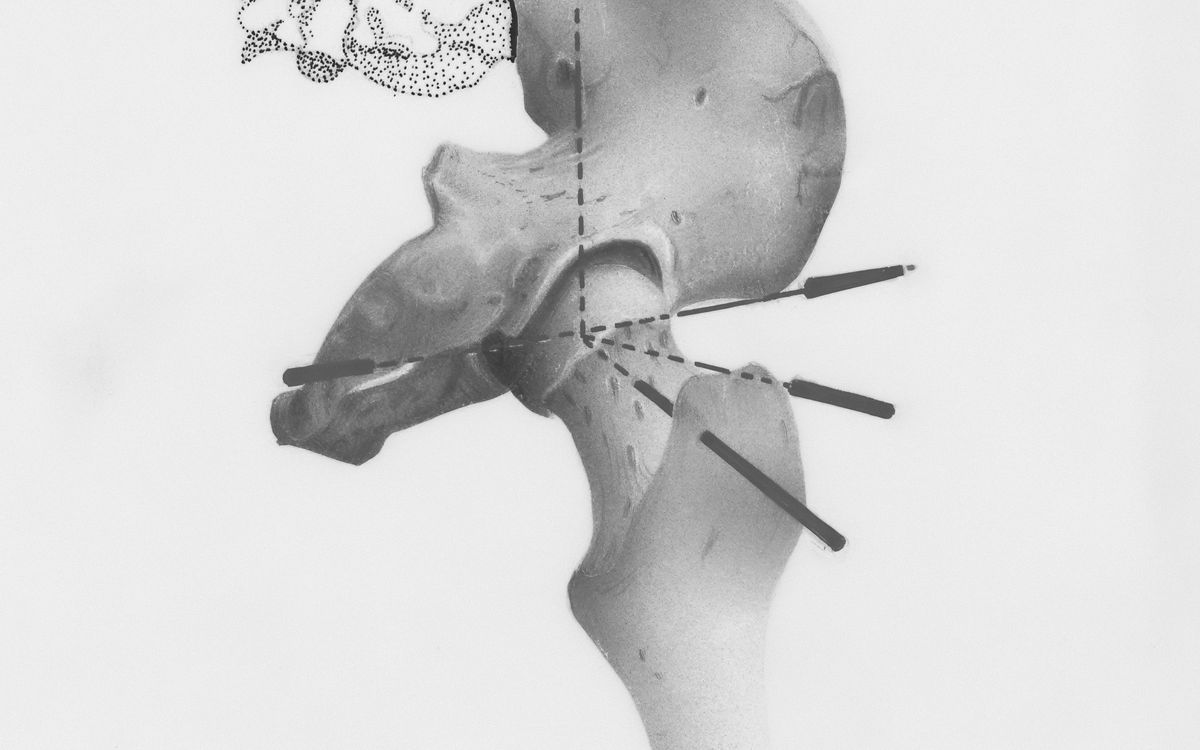
When a patient sits down to talk about a hip replacement, the first questions are almost always about recovery: how long, how much it will hurt, when they can get back to real life. What surprises them is that a big part of that answer comes down to something they had never thought about — which direction I come at the hip from.
The surgical "approach," meaning the path I take through muscle and tissue to reach the joint, shapes how quickly they get moving, how the first few weeks feel, and even the rules they follow afterward. It is one of the most consequential decisions in the whole operation, and most patients have never heard of it.
I perform hip replacements through the direct anterior approach, working from the front of the hip. Here is why — and, just as importantly, where it does not live up to the hype.
What "approach" actually means
Every hip replacement does the same core job: remove the worn-out ball and socket and replace them with a metal, ceramic, and plastic implant. What differs between surgeons is how they get there.
The traditional posterior approach enters from the back of the hip and requires detaching muscles and then repairing them. The direct anterior approach works through a natural gap between muscles at the front — the muscles are moved aside rather than cut. Because those muscles stay attached to the bone, the hip is more stable early on, and patients tend to move more freely, sooner.
What the data shows
Recent studies comparing the two approaches for outpatient hip replacement found the anterior approach had a lower "failure-to-launch" rate — patients who could not go home as planned — of roughly 5.9% versus 12.1% for the posterior approach, along with shorter surgical times (about 80 versus 99 minutes).1
More than 90% of anterior patients are walking with assistance within 24 hours, and many are cleared to go home the same day. The tradeoffs are real too, and I will get to those.
Here is how the two approaches compare on the points patients care about most:
| Anterior approach | Posterior approach | |
|---|---|---|
| Muscle handling | Spared — moved aside | Detached, then repaired |
| Early stability | Higher; low early dislocation | Traditionally more early risk |
| Hip precautions | Usually none | Often restricted early weeks |
| Surgeon learning curve | Steep (~100 cases) | More established, widely taught |
| Common downside | Patch of thigh numbness | Muscle repair to heal |
The honest tradeoffs
Two things I tell every patient. First, the anterior approach has a real learning curve. A surgeon's complication rate tends to settle only after roughly 100 cases, and studies show that in less experienced hands there can be higher rates of fracture and nerve irritation. The approach is not magic — the surgeon's comfort with it matters far more than the name of the technique.2
Second, the most common side effect is numbness over the outer thigh. A small sensory nerve, the lateral femoral cutaneous nerve, runs right through the surgical field and can get irritated. This causes a patch of altered or numb skin — not weakness and not deep pain. For most people it shrinks over time or becomes something they stop noticing, but it is common enough that I mention it to everyone.
The anterior approach also is not the right fit for every body type or every hip; certain deformities, some larger patients, and many revision cases are better served by a different approach. I would rather choose the technique that is safest for your anatomy than force everyone into one.
Who I recommend this for
In almost all patients, the anterior approach is an excellent option — it is the only one I do. That includes obese and muscular patients, where the anterior approach can be challenging but, in my hands, is still superior. Combined with modern pain protocols and a same-day discharge pathway, many of my hip patients are home the same evening and walking that night.
If you turn out not to be a candidate, that is not bad news; it simply means we will pick the approach that gives you the best and safest result for your particular hip.
Frequently asked questions
Will I have to follow "hip precautions" after an anterior hip replacement?
Usually not. Because the muscles at the back of the hip are not disturbed, the joint is stable early, and most of my anterior patients do not need the old restrictions on bending, crossing the legs, or twisting. You can generally move naturally from day one.
Is the anterior approach less painful?
Many patients report an easier early recovery because muscle is spared rather than cut. That said, most modern pain control comes from nerve blocks and multimodal medication. The approach helps, but it is one piece of a larger plan.
What is the numbness on my thigh, and will it go away?
It comes from a small sensory nerve near the incision that can get irritated during surgery. It causes a patch of numb or tingling skin on the outer thigh — not weakness. For most people it shrinks over time or becomes unnoticeable, though a small patch can persist.
Can I really go home the same day?
For most healthy patients, yes. With the anterior approach, modern anesthesia, and a same-day pathway, more than 90% of patients are up and walking within 3 hours and are home that evening. We decide together based on your health and your setup at home.
How do I know if my surgeon is experienced with this approach?
Just ask: how many anterior hips do you do each year, and how long have you been doing them? The technique has a steep learning curve, so volume matters. A high-volume surgeon who is comfortable with the approach is what makes it safe and reliable.
A hip replacement is one of the most reliable, life-changing operations we do in orthopedics — patients go from barely walking to hiking, traveling, and sleeping through the night again. The approach is only one part of getting you there comfortably and quickly, but it is a part worth understanding. If you are weighing a hip replacement and wondering whether the anterior approach is right for you, let's talk it through in clinic and match the plan to your body and your goals.
References
- Passano B, Simcox T, Singh V, Anil U, Schwarzkopf R, Davidovitch RI. Does surgical approach to the hip play a role in same-day discharge outcomes? J Arthroplasty. 2023;38(7 Suppl 2). PMID 36608836
- Peters RM, Ten Have BLEF, Rykov K, et al. The learning curve of the direct anterior approach is 100 cases: an analysis based on 15,875 total hip arthroplasties in the Dutch Arthroplasty Register. Acta Orthop. 2022;93:775-782. doi:10.2340/17453674.2022.4801
This article is general education, not medical advice for your situation. Every knee and hip is different — talk with your own doctor about your care.